 listicle
Best Concrete Sealers for Oklahoma Climate: 2026 Guide
Table of Contents
- Quick Comparison: Best Concrete Sealers for Oklahoma Climate
- 1. GatorCrete Professional Sealing: GATOR TOUGH Protection for Tulsa-Area Concrete
- 2. Foundation Armor AR350: Best Solvent-Based Acrylic for Wet-Look Driveways
- 3. MasonryDefender with De-Icing Salt Protection: Best Penetrating Sealer for Freeze-Thaw Cycles
- 4. Behr Premium Wet Look: Best DIY Option for Homeowners
- 5. Super Seal 30: Best High-Gloss Sealer for Stamped and Decorative Concrete
- 6. Nox-Crete Natraseal: Best Commercial-Grade Penetrating Sealer
- How Often to Seal a Concrete Driveway in Oklahoma's Climate
- Frequently Asked Questions
Last Updated: September 16, 2026
Quick Comparison: Best Concrete Sealers for Oklahoma Climate
Concrete sealers are protective coatings or penetrating treatments applied to concrete surfaces to block water, salts, and UV damage. Choosing the best concrete sealers for Oklahoma climate means accounting for something most generic guides ignore: the punishing combination of 100-degree summers, high humidity, and winter freeze-thaw cycles that crack driveways across the Tulsa metro.
The sealers below are ranked by how well they hold up to those specific stressors.
| Sealer | Type | Finish | Best For |
|---|---|---|---|
| GatorCrete Professional Sealing | Professional application | Custom | Tulsa-area homes and businesses |
| Foundation Armor AR350 | Solvent-based acrylic | Wet-look | Driveways wanting gloss |
| MasonryDefender | Silane/siloxane penetrating | Natural | Freeze-thaw protection |
| Behr Premium Wet Look | Acrylic | High-gloss | DIY homeowners |
| Super Seal 30 | Solvent acrylic | High-gloss | Stamped concrete |
| Nox-Crete Natraseal | Silane penetrating | Invisible | Commercial structures |
How We Evaluated These Sealers
We scored each option on four criteria: resistance to UV degradation and freeze-thaw cycling, breathability, finish quality, and how realistic the application is for a Tulsa-area property owner.
A common mistake is buying a sealer rated only for UV or only for salt. Oklahoma concrete faces both, often in the same year. The American Concrete Institute guidance on curing and sealing notes that sealer performance depends heavily on surface preparation and moisture conditions at application, which is why we weighted substrate readiness so heavily.
1. GatorCrete Professional Sealing: GATOR TOUGH Protection for Tulsa-Area Concrete
Surface preparation, moisture vapor transmission, and application timing decide whether the coating lasts five years or fails in one.
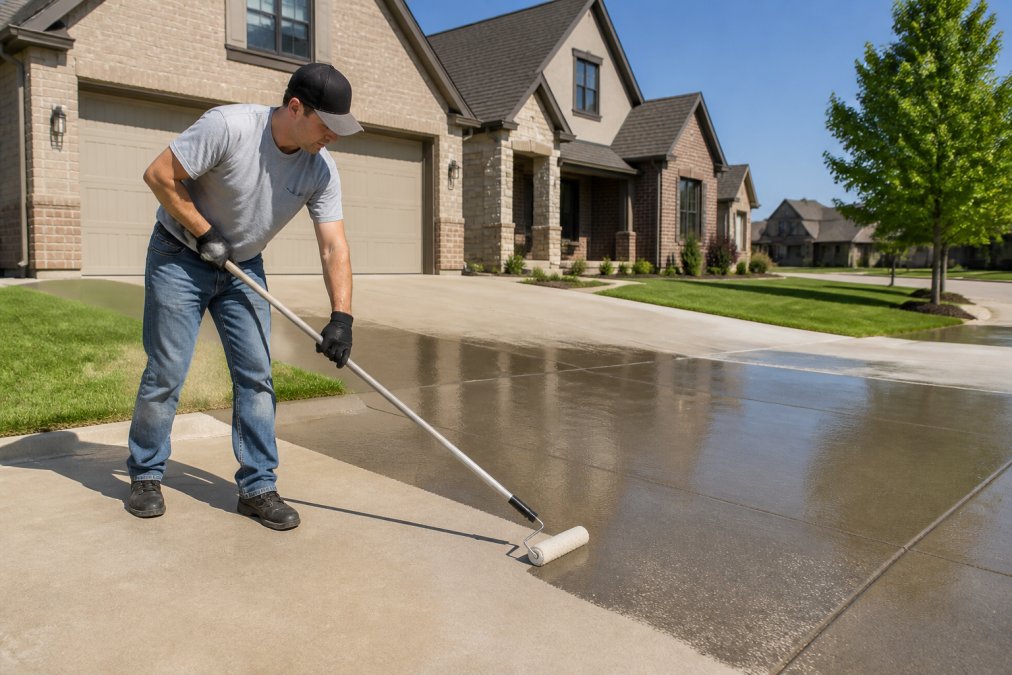
GatorCrete delivers durable concrete solutions with a focus on transparency and communication. We handle surface preparation, choose between penetrating and film-forming products based on your concrete's porosity, and stand behind GATOR TOUGH results.
Pros:
- Application matched to local clay soil and climate conditions
- Includes surface preparation and cleanup
- Residential and commercial capability
Cons:
- Requires scheduling, unlike a DIY bucket-and-roller job
2. Foundation Armor AR350: Best Solvent-Based Acrylic for Wet-Look Driveways
Foundation Armor AR350 is a solvent-based acrylic sealer built for a durable, wet-look finish. It uses virgin, non-recycled resins, which is the main reason it holds up better than bargain acrylics under UV exposure.
The semi-gloss finish darkens the concrete slightly, which most homeowners either love or hate. It resists water, oil, and chemical exposure well. The tradeoff is ventilation: solvent-based formulas off-gas during application, so plan for a well-ventilated day and keep pets and kids clear until it cures.
Pros: High-quality resin formulation, strong weather resistance Cons: Requires careful application ventilation
3. MasonryDefender with De-Icing Salt Protection: Best Penetrating Sealer for Freeze-Thaw Cycles
MasonryDefender is a penetrating sealer with a silane/siloxane blend that soaks into the concrete rather than sitting on top of it. It is the strongest pick on this list for freeze-thaw protection.
Penetrating sealers leave the surface breathable, so moisture vapor can escape instead of pushing the coating off. That breathability is what prevents spalling when de-icing salt meets a saturated slab. The finish is invisible, so it will not change the look of your driveway at all.
Pros: Superior protection against salt damage, does not alter surface appearance Cons: Provides no decorative sheen
4. Behr Premium Wet Look: Best DIY Option for Homeowners
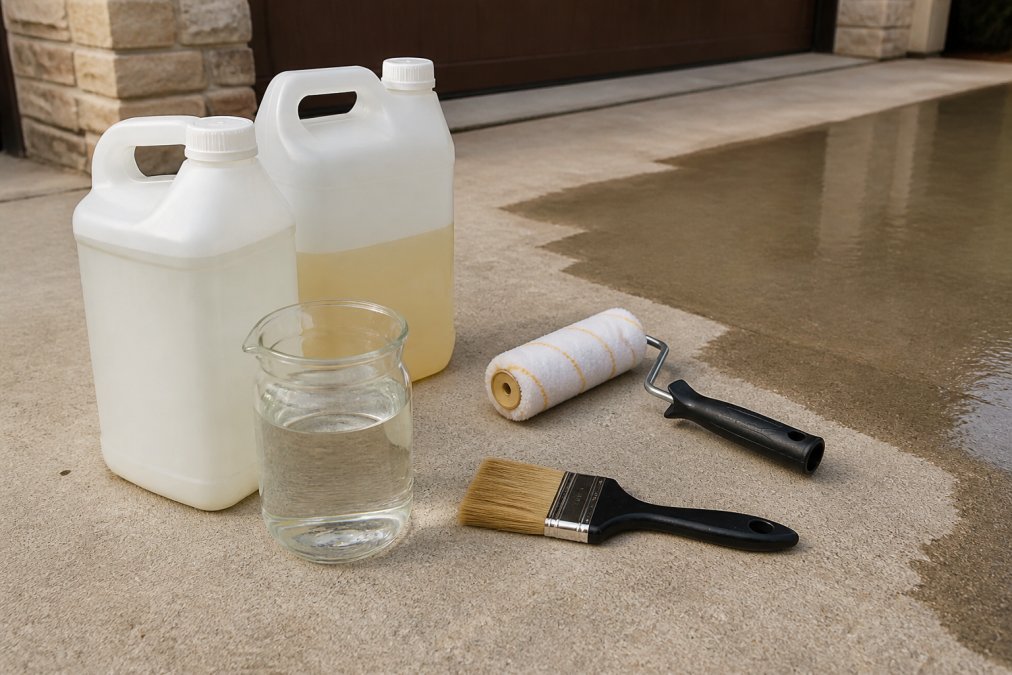
Behr Premium Wet Look is the most accessible option on this list. It is a non-yellowing acrylic formula sold at major retailers, typically in the $40 to $60 per gallon range, and it applies with a standard roller.
The high-gloss finish is dramatic, and it resists water, oil, and grease stains.
5. Super Seal 30: Best High-Gloss Sealer for Stamped and Decorative Concrete
Super Seal 30 is a high-solids solvent-based acrylic sealer made for stamped and decorative concrete. If you have a stamped patio and want the color to pop, this is the product to look at.
6. Nox-Crete Natraseal: Best Commercial-Grade Penetrating Sealer
Nox-Crete Natraseal is a high-performance penetrating sealer using deep silane technology. It is built for commercial and residential concrete that needs long-term structural protection.
How Often to Seal a Concrete Driveway in Oklahoma's Climate
Resealing frequency is not a single number. It depends on the sealer chemistry, the surface, sun exposure, and how the slab handles water. Most practitioners find the following windows hold up in this region:
| Sealer Type | Typical Reseal Window | Why |
|---|---|---|
| Solvent-based acrylic (film-forming) | 2-3 years | UV breaks down the resin film; gloss fades first |
| Water-based acrylic | 1-2 years | Lower solids, thinner film, faster wear |
| Silane/siloxane penetrating | 5-7 years | Works below the surface; UV cannot degrade it |
| Silicate densifier | 5-10 years, often longer | Chemically reacts with free lime; not a coating |
| Epoxy or urethane topcoat | 3-5 years | Harder film, but can yellow or chalk under UV |
What Shortens the Window Here
Three local factors push reseal timelines toward the short end:
- UV load. Concrete in full southern or western sun can hit surface temperatures well above ambient air temperature in July and August. That thermal cycling stresses film-forming sealers faster than the same product would fail in a milder climate.
- Freeze-thaw cycling. Water that enters hairline cracks expands roughly 9% when it freezes. A slab that sees dozens of freeze-thaw cycles between December and March will widen cracks faster than one that sees a handful.
- Clay soil movement. Expansive clay soils swell when wet and shrink when dry, and that movement flexes slabs at control joints and edges. Sealers that stay flexible handle it better than brittle films.
Signs It Is Time to Reseal
Do not wait for visible failure. Check these signals each spring:
- Water no longer beads. Pour a cup of water on the surface. If it soaks in within a minute instead of beading, the sealer is spent.
- Chalky or dull finish. A white powder that wipes off with your hand is UV-degraded resin, not dirt.
- Hairline cracks reappearing. Cracks that were filled and sealed last cycle are opening again.
- Efflorescence. White mineral deposits mean water is moving through the slab, which means the sealer is not doing its job.
- Color fade on stamped or colored concrete. Pigment loss usually tracks sealer loss.
Testing Compatibility Before You Reseal
The American Concrete Institute guidance on curing and sealing notes that sealer performance depends heavily on surface preparation and moisture conditions at application. That principle applies double when you are recoating over an unknown product.
A Simple Maintenance Schedule
- Annually (spring): Inspect, water-test, and clean with a pH-neutral cleaner. Re-sand or re-caulk control joints as needed.
- Every 2-3 years: Reseal film-forming acrylics. Strip first if the old coat is failing.
- Every 5-7 years: Reapply penetrating silane/siloxane sealers. No stripping required in most cases.
- After any crack repair: Spot-seal the repaired area within 30 days so water does not exploit the seam.
Frequently Asked Questions
What is the best concrete sealer for extreme temperature swings?
For Oklahoma's rapid temperature swings, a penetrating silane-siloxane sealer like MasonryDefender or Nox-Crete Natraseal works best. These sealers soak into the concrete and block water without forming a surface film that can crack or peel when temperatures shift. Acrylic sealers can work too, but they need more frequent reapplication. The key is choosing a breathable product that lets moisture vapor escape while keeping liquid water out.
How does high humidity affect concrete sealer application?
Oklahoma's humidity can slow curing and trap moisture under film-forming sealers, causing a milky white appearance called blushing. Penetrating sealers are more forgiving in humid conditions because they do not form a surface film. Apply sealers when humidity is below 80% and rain is not forecast for at least 24 hours. Early morning applications during spring and fall offer the best window in the Tulsa area.
What are the downsides of using concrete sealer?
Sealers require surface preparation before application, and film-forming options can become slippery when wet. Some acrylic sealers yellow over time or show scuff marks. Penetrating sealers avoid these cosmetic issues but do not provide a glossy finish. All sealers need reapplication every 2 to 5 years depending on the product and traffic. Skipping maintenance allows the protection to wear away, leaving concrete vulnerable again.
Can you seal concrete if rain is in the forecast?
No. Rain within 24 to 48 hours of application can wash away uncured sealer or cause uneven curing. Solvent-based products typically need 24 hours of dry weather, while water-based formulas may need 48 hours. In Oklahoma, afternoon thunderstorms are common from April through June, so check the hourly forecast and plan morning applications. If rain catches you off guard, most sealers can be reapplied after the surface dries completely.
How often should concrete be resealed to prevent weather damage?
In Oklahoma's climate, penetrating sealers last 3 to 5 years, while acrylic and film-forming sealers need reapplication every 2 to 3 years. High-traffic driveways and commercial surfaces may need more frequent service. Test by sprinkling water on the surface: if it soaks in instead of beading up, it is time to reseal. Regular resealing prevents freeze-thaw damage, clay soil movement cracks, and UV fading.