 how-to
Preventing Concrete Driveway Cracks in Tulsa: 2026 Guide
Table of Contents
- Causes of Concrete Driveway Cracks in Tulsa
- Concrete Driveway Repair vs Replacement: How to Decide
- When to Seal a Concrete Driveway (and What Happens If You Skip It)
- Preventing Concrete Driveway Cracks: A Step-by-Step Plan
- Repair Methods That Actually Hold: From Crack Filler to Polyurethane Injection
- Preventative Maintenance Schedule and Material Choices for Longevity
- Frequently Asked Questions
Last Updated: September 18, 2026
Causes of Concrete Driveway Cracks in Tulsa
Preventing concrete driveway cracks in Tulsa starts with understanding why the ground under your slab moves. This GatorCrete guide breaks down the real causes and gives you a step-by-step plan to stop them.
The two main drivers are clay soil and the freeze-thaw cycle.
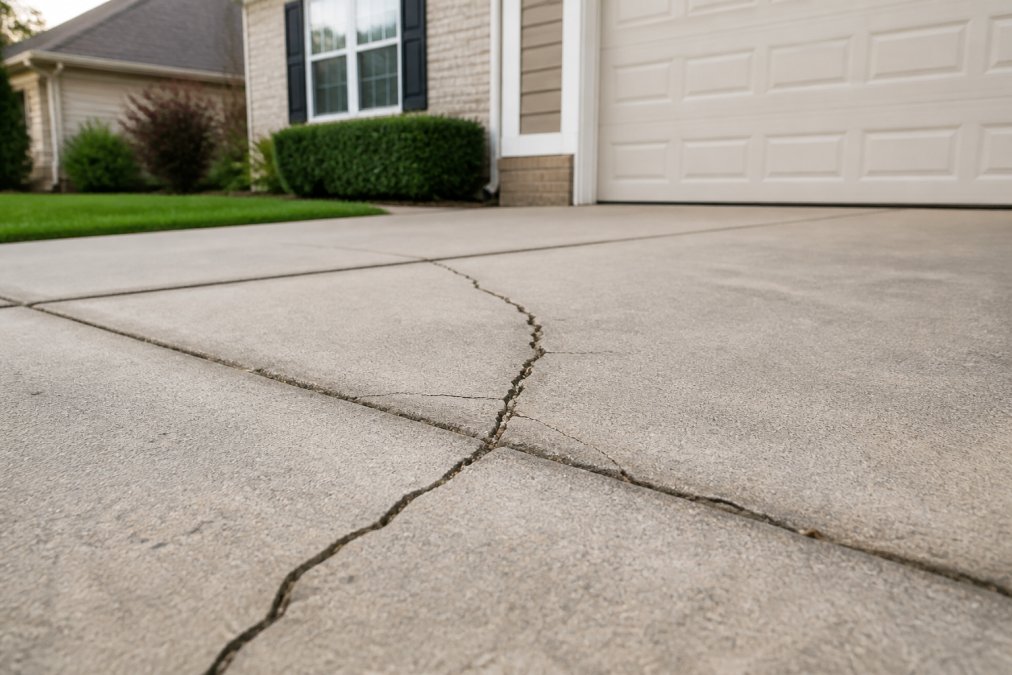
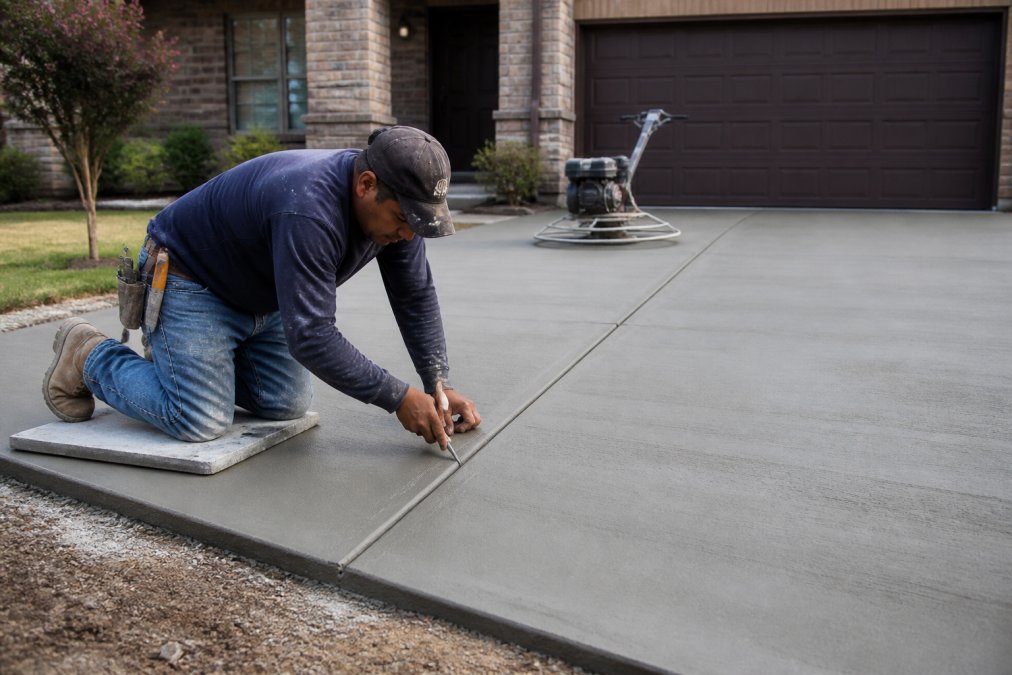
A control joint is a planned groove cut into fresh concrete to force cracks into a straight, harmless line. When joints fail, cracks wander.
Tulsa's Clay Soil and the Freeze-Thaw Cycle
Tulsa sits on expansive clay that swells when wet and shrinks when dry, pushing and pulling on a slab all year.
Winter adds a second problem: water seeps into gaps, freezes, expands, and pries the concrete apart. This freeze-thaw cycle widens every weakness.
- Wet spring: clay swells and lifts the slab
- Dry summer: clay shrinks and leaves voids
- Cold snap: trapped water freezes and pushes upward
- Thaw: the slab drops back unevenly, and cracks open
Bad Mix Design, Weak Subgrade, and No Control Joints
A poor concrete mix design fails faster than the soil ever could. Too much water weakens the slab; the water-cement ratio controls strength, and shortcuts show up as cracks within a year or two.
The subgrade is the soil base under the slab. If it is not compacted properly, the concrete has nothing solid to rest on.
Missing control joints are the third common failure.
Concrete Driveway Repair vs Replacement: How to Decide
Repair wins when damage is cosmetic and the slab is stable. Replacement is the better call when the base has failed or the concrete is crumbling through its full depth. The deciding factor is not the crack, it is what sits under the slab.
Run These Four Checks Before You Get a Quote
You can diagnose most driveways in about twenty minutes with a level, a screwdriver, and a hose.
What Each Result Points To
| What You Find | Best Choice | Why |
|---|---|---|
| Hairline cracks, no height change, solid ring | Seal or fill | Slab and base are stable |
| Cracks plus sinking or lifting, hollow spots | Leveling | Base can be corrected without a tear-out |
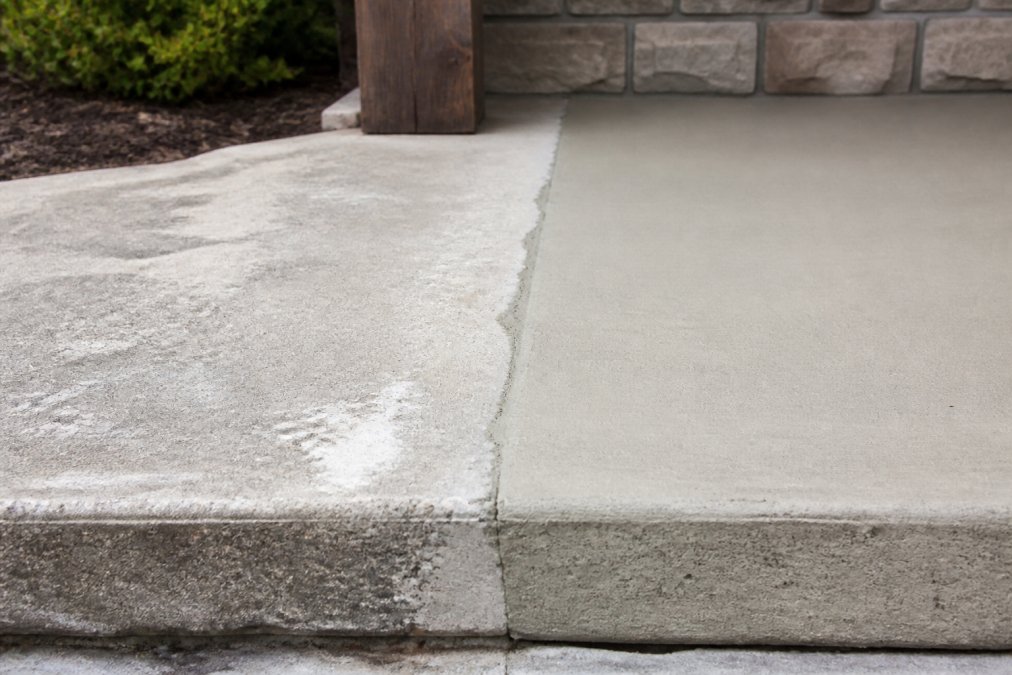
| Crumbling, pitting, flaking, sound slab | Resurface | Surface is worn, slab is sound |
| Deep cracks, multiple sections moving, widespread hollow sound | Replace | Base and slab have both failed |
The Trade-Offs Nobody Puts in Writing
Lifespan. A new slab on a well-compacted base commonly lasts several decades. A resurfaced or leveled slab that was otherwise sound can add many more years, but it will not outlast the base it sits on. If the base is failing, resurfacing buys time, not a permanent fix.
How to Read a Contractor's Recommendation
Here is the honest part most quotes skip: a contractor who only sells full replacements will always recommend one. Ask directly whether leveling or resurfacing can restore what you have, and what the base looks like under the slab. A good answer describes the subgrade, drainage, and joint layout; a weak answer describes only the surface.
When to Seal a Concrete Driveway (and What Happens If You Skip It)
Seal a concrete driveway once it is fully cured, about 28 days for new concrete, then reseal every few years depending on wear and weather. Sealing is the cheapest protection you can buy.
Skip sealing and you invite:
- Surface spalling, where the top layer flakes off
- Pitting, small holes that trap water and salt
- Hydrostatic pressure, water pushing up from below
- Faster freeze-thaw damage each winter
Preventing Concrete Driveway Cracks: A Step-by-Step Plan
Preventing concrete driveway cracks comes down to three jobs: manage water, protect the joints, and seal on schedule. Do them in order, a sealer over a drainage problem just traps water in.
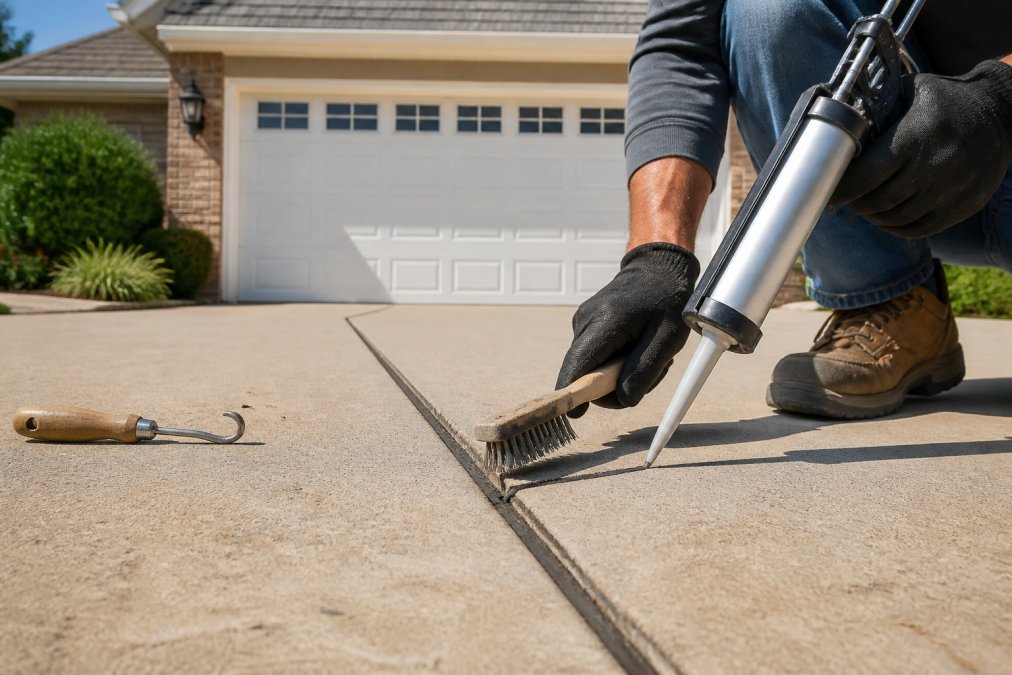
What you'll need:
- A rake or shovel for regrading
- A wire brush and crack filler
- A masonry sealant and applicator
- A hose for a water test
Step 1: Fix Grading and Drainage First
Water is the enemy. Grade the soil to slope away from the slab and clear any path that lets water pool at the edges. Drainage fixes stop most future cracking before it starts.
Check these spots:
- Soil piled against the slab, which traps water
- Gutters and downspouts dumping next to the driveway
- Low spots where water sits after rain
- Cracks at the edge where water seeps under
Step 2: Keep Control Joints Working
Clean out every control joint and expansion joint with a wire brush, then refill with a flexible crack filler or masonry sealant. Joints that stay full and flexible keep absorbing movement so the slab does not have to.
Step 3: Seal on Schedule and Fill Hairline Cracks
Fill any hairline cracks before sealing. A good crack filler keeps water out and the sealer locks the surface, protecting the structural integrity of the slab.
Repair Methods That Actually Hold: From Crack Filler to Polyurethane Injection
The right repair depends on the crack. Small surface cracks take filler; cracks that let water into the base need polyurethane injection or concrete lifting. Matching method to damage is what makes a repair last.
Here is how the common methods compare:
- Crack filler: best for hairline and mid-size cracks, cheap and DIY-friendly
- Masonry sealant: flexible, good for joints and edges
- Polyurethane injection: seals cracks that reach the base and stops water flow
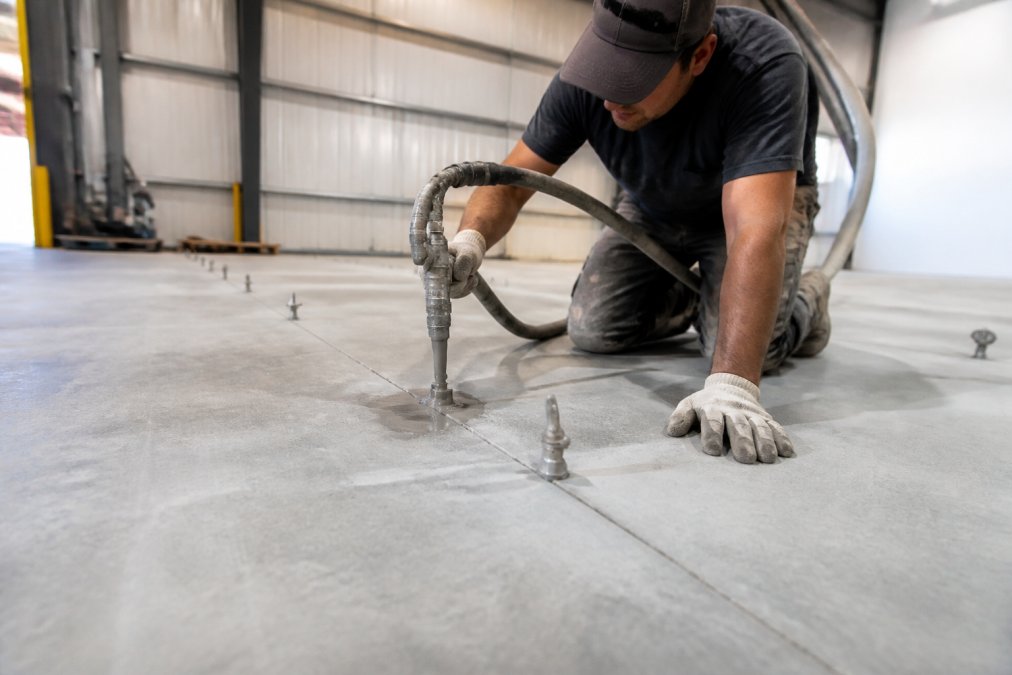
- Slabjacking: pumps material under a sunken slab to lift it back level
- Resurfacing: restores a worn, pitted, or flaking surface without a full tear-out
Preventative Maintenance Schedule and Material Choices for Longevity
A simple yearly routine prevents most of the damage we see, and paired with the right materials a slab can last decades. Driveway maintenance is far cheaper than replacement, and timing matters as much as the task itself.
A Seasonal Schedule Built Around Local Soil and Weather
Expansive clay responds to the same seasonal pattern every year: wet springs swell the soil, dry summers shrink it, and the first hard freeze finds every gap that opened over the summer. Time your maintenance to get ahead of that cycle.
| Task | When | Why It Matters |
|---|---|---|
| Inspect for new cracks and check grading | Early spring | Catches movement before it grows |
| Clean and refill joints | Late spring | Keeps joints absorbing movement |
| Fill hairline cracks | Late summer | Blocks water before the freeze |
| Reseal the surface | Late summer or early fall | Protects against moisture and salt |
| Avoid salts and metal tools | Winter | Prevents surface damage |
Material Choices That Decide How Long a Slab Lasts
If a slab has already settled, professional concrete leveling can restore it without a full tear-out. We fix what can be fixed, and only replace what has truly failed.
Frequently Asked Questions
Does anyone guarantee concrete not to crack?
No contractor can guarantee concrete will never crack. Concrete shrinks as it cures, and Tulsa's clay soil expands and contracts with moisture changes, so some movement is normal. What you can control is crack width and location. A proper mix design, compacted subgrade, correctly spaced control joints, and routine concrete sealing keep most cracking to tight hairline cracks that do not threaten the slab. Get a written scope that names those steps instead of a no-crack promise.
Is it normal for concrete to crack after 6 months?
Hairline cracks within the first 6 to 12 months are common, especially during a dry Oklahoma summer followed by fall rains. They usually trace back to the curing process, soil expansion, or joints cut too late or too far apart. Cracks wider than a credit card, vertical displacement between slabs, or cracks that keep growing point to settling or a weak subgrade. Have those assessed before you assume it is just normal shrinkage.
How does Tulsa's soil composition affect concrete longevity?
Tulsa sits on expansive clay that swells when wet and shrinks when dry. That movement pushes and pulls on a concrete slab from below, and it is the leading driver of settling, uneven panels, and cracking in the area. Compaction of the subgrade before pouring, correct drainage to keep water away from the slab edge, and sealed joints all reduce how much moisture reaches the soil under your driveway.
What is the cheapest way to fix a cracked concrete driveway?
For narrow hairline cracks, cleaning the crack and filling it with a quality crack filler or masonry sealant is the lowest-cost fix, and it slows moisture infiltration. Wider cracks or settled panels need polyurethane injection, slabjacking, or concrete lifting rather than surface filler. Skipping repair lets water reach the subgrade and turns a small fix into a full replacement. Ask for a quote that explains which method fits your crack.
Cracked concrete is a water and soil problem long before it is a surface problem. The fix is a plan, not a patch. GatorCrete brings GATOR TOUGH craftsmanship, expert repairs, and protective sealing to homes and businesses across the Greater Tulsa area. We focus on transparency, clear communication, and results that hold up to local soil and weather. Get a Quote and protect your concrete before the next freeze.