 ultimate-guide
Concrete Driveway Repair Cost in Tulsa: 2026 Guide
Table of Contents
- What Drives Concrete Driveway Repair Cost in Tulsa
- Signs Your Concrete Driveway Needs Repair (and What Each One Costs)
- Concrete Driveway Resurfacing Cost: When a New Layer Beats a Full Pour
- Hiring a Concrete Contractor for Driveway Repair in Tulsa
- Repair or Replace? A Decision Framework for Tulsa Homeowners
- Financing and Payment Options for Concrete Driveway Repair
- Frequently Asked Questions
Last Updated: September 18, 2026
What Drives Concrete Driveway Repair Cost in Tulsa
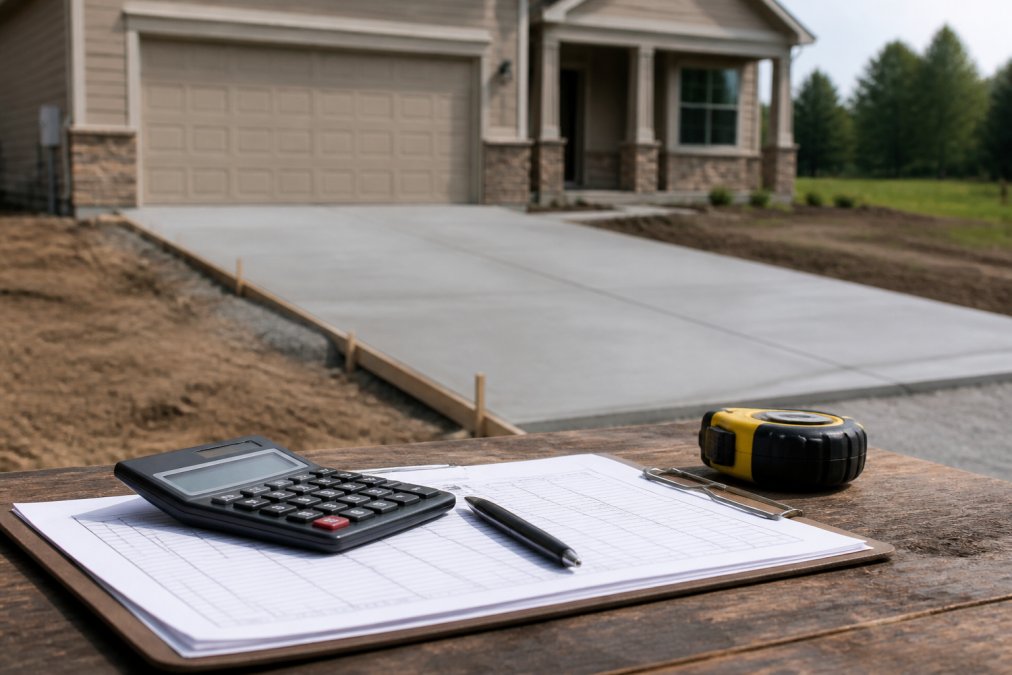
The cost of concrete driveway repair in Tulsa depends on four variables: the failure type, slab thickness and PSI, site accessibility, and how much of the pour has to come out. Two driveways of identical size can land thousands of dollars apart because one has a hairline crack and the other has a settled slab sitting on shrinking clay. This guide from GatorCrete walks through what actually moves the number, how to tell which repair you need, and when replacement beats patching.
Most homeowners assume cracking means replacement. It usually doesn't.
Clay Soil, Freeze-Thaw Cycles, and Why Tulsa Slabs Move
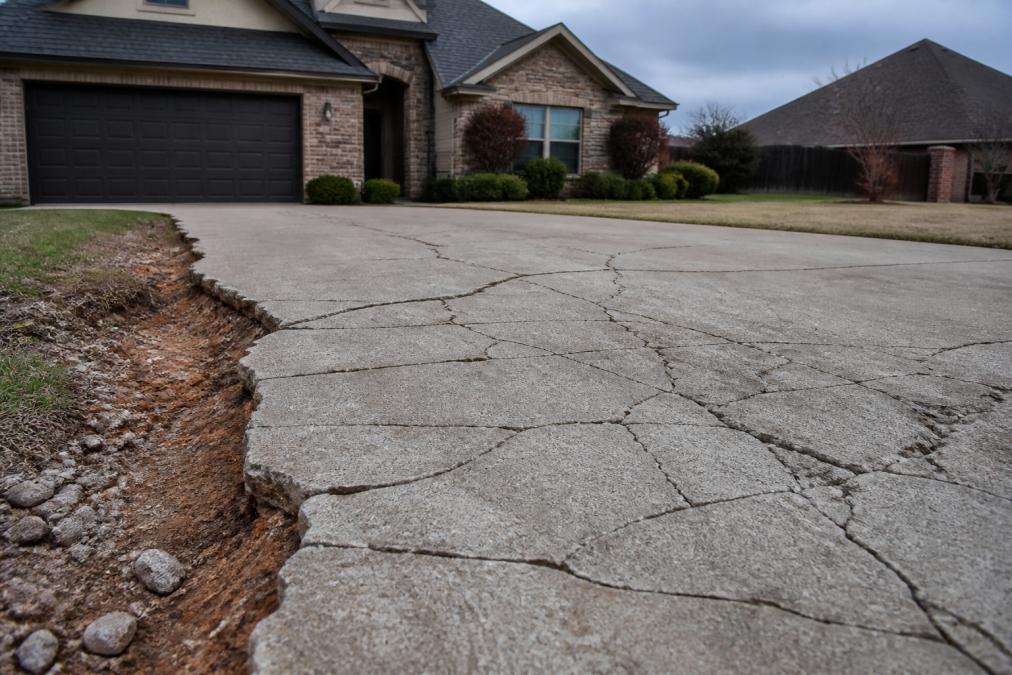
Tulsa sits on expansive clay, and that single fact explains most driveway damage in the area. Clay swells when it absorbs water and shrinks as it dries, so the soil beneath a slab moves seasonally. Add freeze-thaw cycles that push moisture through existing cracks, and you get the pattern local contractors see constantly: corner settling, spider-web cracking, and slabs that heave at expansion joints.
The fix for soil movement is almost never "pour more concrete over it." It's addressing sub-base preparation and drainage first.
Repair Method Pricing: Crack Injection, Mudjacking, and Partial Replacement
Pricing depends on quantity, access, and material, so any contractor quoting a flat number over the phone is guessing. Here's how the three main repair methods compare on what drives their cost:
| Repair Method | Best For | Main Cost Drivers | Typical Lifespan |
|---|---|---|---|
| Crack injection / sealant | Hairline and mid-width cracks | Linear feet, crack depth, sealant type | Short-to-mid term |
| Mudjacking / slab lifting | Settled slabs that are still intact | Number of lift points, void depth, access | Mid-to-long term |
| Partial replacement | Crushed, spalled, or badly broken sections | Square footage, thickness, PSI, haul-away | Long term |
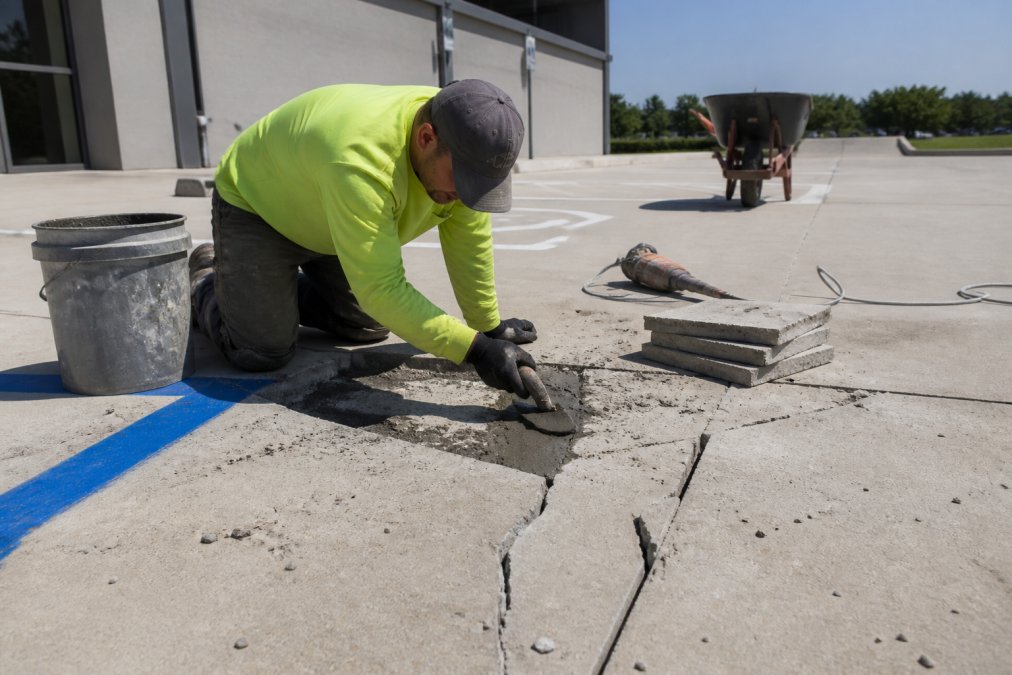
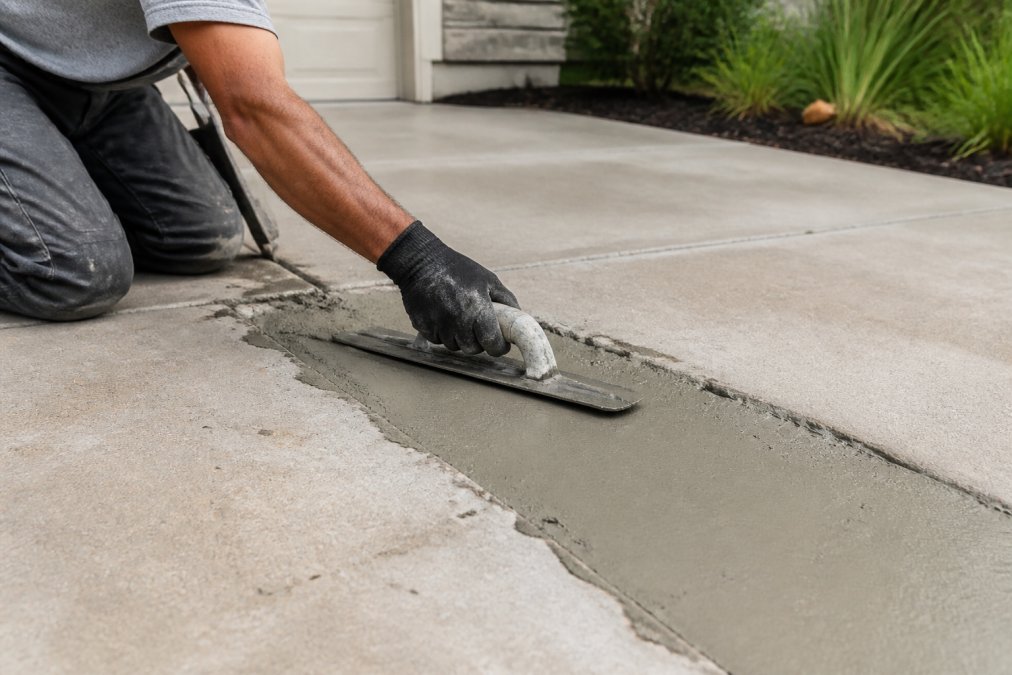
Crack injection is the cheapest entry point and the right call when the slab is otherwise sound. Mudjacking lifts a settled slab back to grade by pumping material underneath, which preserves the existing surface. Partial replacement removes and repours only the failed section, and it's the only method that restores full load-bearing capacity when the concrete itself has failed.
Ask any contractor which method they're recommending and why. A straight answer tells you more than the price does.
Signs Your Concrete Driveway Needs Repair (and What Each One Costs)
Signs your concrete driveway needs repair fall into three tiers, and each tier points to a different fix and a different cost band. Reading them correctly is what keeps you from paying for a full pour when a targeted repair would hold.
Cracking is the first tier. Hairline cracks that haven't widened are usually cosmetic and sealable. Cracks wider than a quarter inch, or cracks that run diagonally across a slab, often signal movement underneath and need investigation before sealing.
Spalling is the second tier. Spalling is the flaking or peeling of the concrete surface, and it typically traces back to poor finishing, inadequate curing, or deicing salt exposure. Once the surface layer is gone, the aggregate is exposed and the slab deteriorates faster. Resurfacing can buy years here.
Heaving and settlement is the third tier. A slab that has risen or dropped out of plane is a structural problem, not a surface one. Mudjacking or partial replacement is the realistic answer.
Concrete Driveway Resurfacing Cost: When a New Layer Beats a Full Pour
Concrete driveway resurfacing cost typically sits well below full replacement because you're paying for a thin overlay rather than demolition, haul-away, and a new structural slab. Resurfacing is the right call when the slab is structurally sound but the surface is worn, spalled, or stained beyond cleaning.
The cost of a resurfacing job is driven by three things most quotes bury: the square footage of the overlay, the finish you choose, and how much surface prep the existing slab needs. Prep is the variable homeowners underestimate. A slab that is clean and sound may only need pressure washing and a bonding primer. A slab with oil staining, efflorescence, or a previously sealed surface needs mechanical profiling, grinding or shot blasting, before any overlay will bond. That prep step is labor, and it is the difference between an overlay that lasts a decade and one that peels in two winters.
Finish Options and What They Do to the Price
Resurfacing is also where you can change the look of the driveway, not just repair it. The three common finishes behave differently on cost and maintenance:
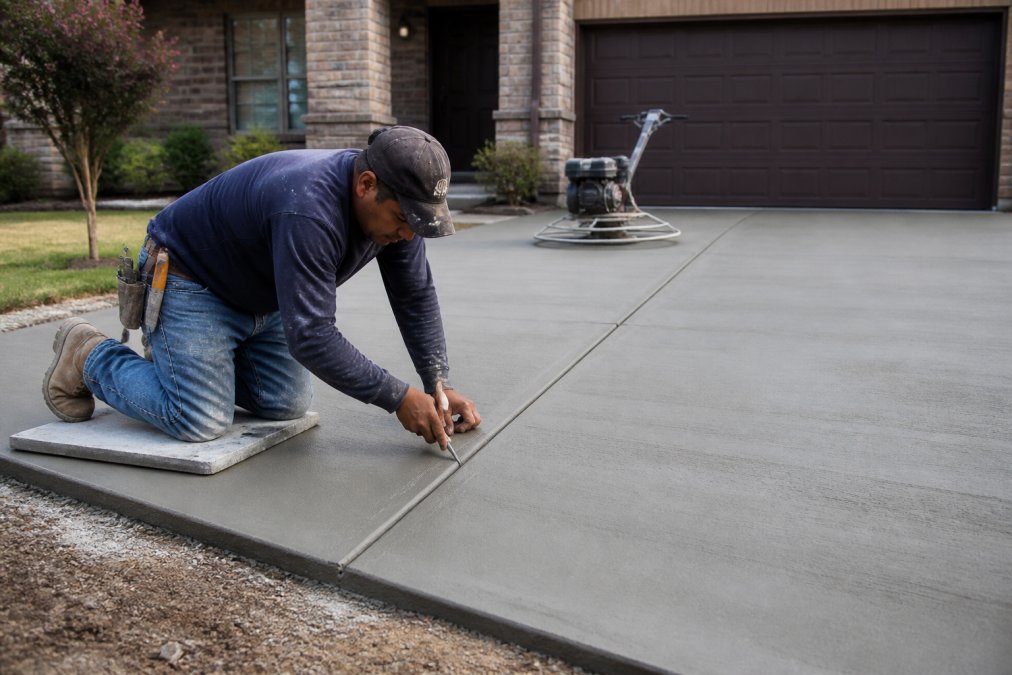
- Broom finish. The standard textured surface, created by dragging a broom across wet concrete. Lowest cost, best traction, easiest to maintain. If you want the repair to blend with an existing broom-finished driveway, this is the match.
- Stamped overlay. A stampable overlay is pressed with molds to mimic stone, brick, or slate. The material cost is higher and the labor is significantly higher because stamping is slow, skilled work. Maintenance is also higher: the stamped surface holds dirt in its texture and usually needs resealing every few years to keep the color and protect the pattern.
- Exposed aggregate. The surface paste is washed away to reveal the aggregate beneath. Durable and slip-resistant, but the finish is difficult to match to an existing slab and the wash-off step is weather-sensitive, which can push scheduling and cost.
If your goal is purely to stop further surface deterioration at the lowest cost, broom finish is the answer.
Where Resurfacing Falls Short
Resurfacing also demands proper surface prep. The existing concrete has to be cleaned, profiled, and often primed so the overlay bonds. Skipping prep is why neighborhood overlays peel within a couple of years.
Hiring a Concrete Contractor for Driveway Repair in Tulsa
Hiring a concrete contractor for driveway repair comes down to verifying three things before money changes hands: licensing and insurance, a written scope, and a payment schedule tied to milestones. Everything else is secondary.
What to Ask Before You Sign
- Is the quote itemized by phase, or a single lump sum?
- What PSI concrete is specified, and what thickness?
- Is reinforcement mesh or rebar included?
- How will you handle drainage slope and grading?
- What's the curing time before I can drive on it?
- How much deposit is required, and when is the balance due?
- Who pulls the permit if one is required?
- What's the written warranty on workmanship?
Repair or Replace? A Decision Framework for Tulsa Homeowners
Use this framework to decide between repair and replacement. Work through the questions in order, and stop at the first one that applies.
| If the slab... | Then... | Why |
|---|---|---|
| Has hairline cracks, otherwise sound | Seal or inject | Cheapest fix, preserves the slab |
| Has settled but is intact | Mudjacking | Lifts slab back to grade |
| Has spalled surface, sound structure | Resurface | Restores surface without demolition |
| Has crushed or broken sections | Partial replacement | Restores structural integrity |
| Has widespread failure across the pour | Full replacement | Repair stops being cost-effective |
Financing and Payment Options for Concrete Driveway Repair
Most concrete work is paid directly, and payment terms are negotiable on larger jobs. A milestone schedule, typically a deposit, a payment at rough completion, and a final payment after cure and walkthrough, protects both sides.
Frequently Asked Questions
How much does it cost to repair a cracked concrete driveway?
Crack repair pricing depends on crack width, depth, and whether the slab has shifted. Hairline cracks that get sealed cost far less than structural cracks requiring injection or partial replacement. In Tulsa, clay soil movement is a common cause, so a contractor should check for underlying settlement before quoting. GatorCrete provides estimates so you get a number tied to your actual slab, not a generic range.
Is it cheaper to patch or replace a concrete driveway?
Patching is almost always cheaper upfront, but it only makes sense when the damage is isolated and the rest of the slab is sound. If more than 30% of the driveway shows cracking, spalling, or heaving, patching becomes a recurring expense. A contractor can assess structural integrity and tell you whether repair or replacement gives you better long-term value. Request a quote to compare both options for your specific driveway.
How do I know if my driveway needs repair or full replacement?
Look for three or more cracks wider than a quarter inch, sections that have sunk or lifted, and widespread surface flaking. Isolated cracks or a single settled panel usually qualify for repair. When damage spans multiple slabs or the sub-base has failed, replacement is the more durable choice. A professional evaluation will confirm which category your driveway falls into.
What factors influence the cost of concrete driveway repair in Tulsa?
Key cost factors include the repair method (sealing, injection, mudjacking, or partial replacement), square footage affected, site accessibility, and whether the sub-base needs correction. Tulsa's clay soil and freeze-thaw cycles often require drainage improvements alongside the repair. Labor costs, material surcharges, and weather-related delays also affect the final number. GatorCrete factors all of these into a transparent written estimate.