 comparison
Concrete Driveway Repair vs Replacement: 2026 Guide
Table of Contents
- Concrete Driveway Repair vs Replacement: How to Decide
- Signs a Concrete Driveway Needs Replacement
- Average Lifespan of a Concrete Driveway
- Cost Comparison: Patching, Resurfacing, or Full Replacement
- When Repair Is the Smart Choice
- When Replacement Is the Only Option
- Get a Professional Assessment
- Frequently Asked Questions
Last Updated: September 8, 2026
Concrete Driveway Repair vs Replacement: How to Decide
Few home maintenance questions carry as much weight as the concrete driveway repair vs replacement decision. Many homeowners are quoted for replacement when a targeted repair would solve the problem for a fraction of the cost, but some driveways are so far gone that patching is throwing money at a temporary fix. This guide gives you a decision framework based on damage type, slab age, and structural integrity.
Why the Decision Matters for Tulsa Homeowners
The choice determines both your immediate budget and long-term maintenance schedule. A premature replacement costs several times more than a repair, while a delayed replacement can lead to structural failure, drainage issues, and safety hazards. For Tulsa homeowners, expansive clay soil adds complexity: soil movement beneath the slab is often the real culprit behind cracking. Diagnose whether your problem is cosmetic surface damage or a symptom of base failure.
Signs a Concrete Driveway Needs Replacement
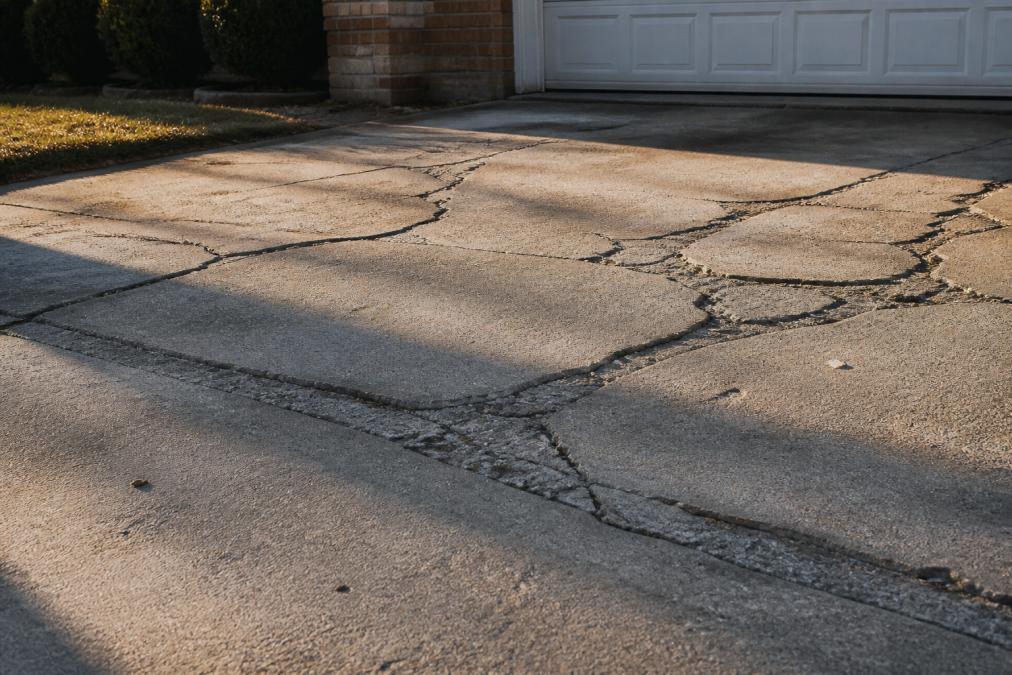
The clearest sign that replacement is necessary is when damage runs deeper than the surface. Deep-seated cracks wider than a quarter-inch, slabs settled or heaved more than half an inch, and degradation across more than 25 percent of the driveway point to structural problems. When the sub-base has failed due to soil erosion or poor compaction, no amount of patching will restore load-bearing capacity, the concrete will keep cracking along the same fault lines.
Surface Cracks vs. Structural Failure
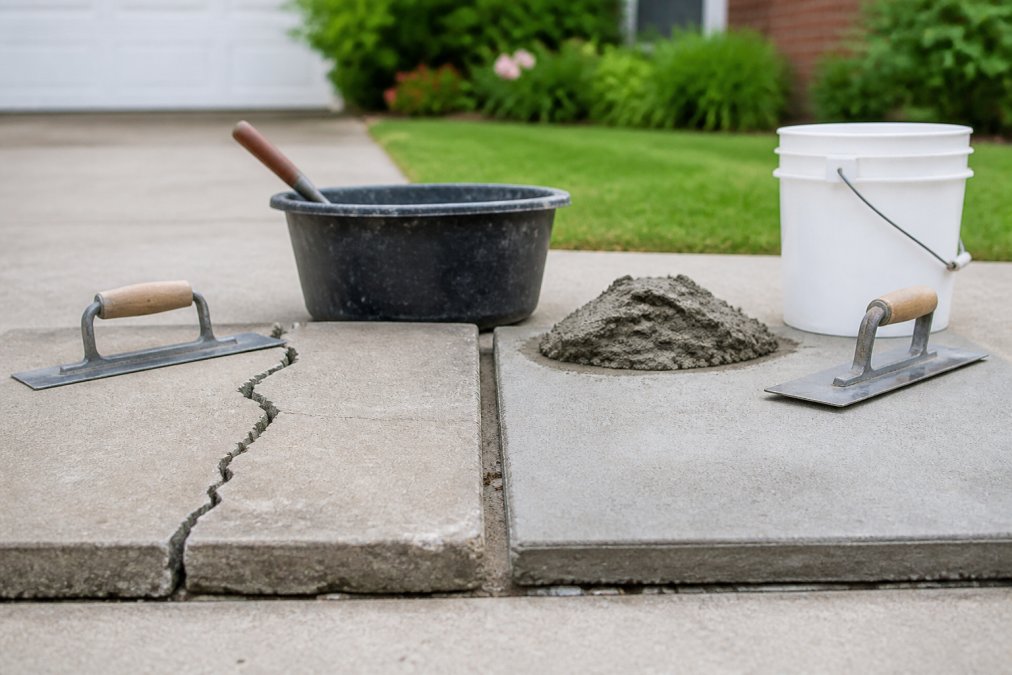
Surface-level issues, hairline fractures from curing shrinkage, light spalling from de-icing salts, cosmetic discoloration, respond well to patching, resurfacing, and joint sealing. Structural failure presents differently: cracks running completely through the slab, settled sections creating trip hazards, and exposed, rusting reinforcement mesh. If you can see an elevation difference between two sides of a crack, the problem is structural.
A Diagnostic Framework: Damage Type, Age, and Base Condition
A more reliable approach is to score your driveway against three independent variables: damage type, slab age, and base condition.
Damage Type: Categorize every defect you see. Map the driveway and note each crack's width, length, and whether it runs through the full depth of the slab. Use a simple key:
- Cosmetic (repairable): Hairline cracks under 1/8 inch, surface scaling, discoloration, efflorescence (white powdery deposits), and pop-outs (small pits where aggregate has popped loose).
- Moderate (likely repairable): Cracks between 1/8 and 1/4 inch, isolated spalling, and surface delamination where the top layer separates from the slab below.
- Structural (replacement territory): Cracks wider than 1/4 inch, cracks with vertical displacement (one side higher than the other), full-depth cracks that you can trace from edge to edge, exposed and corroding rebar or wire mesh, and large areas where the surface has crumbled down to the aggregate.
Slab Age: A 5-year-old slab with structural cracking indicates an installation defect or failing base, repair will likely fail again, and you should pursue a warranty claim or replacement. A 25-year-old slab with the same damage has reached the end of its service life. The American Concrete Institute (ACI) notes a properly installed residential driveway should last 25 to 30 years; past that mark with structural distress, replacement is almost always correct (concrete.org).
Base Condition: You cannot see the sub-base directly, but surface behavior reveals it. A failing base produces cracks that reappear shortly after repair, progressive settling, and a hollow sound when tapped, indicating delamination. Expansive clay soils, common across the south-central United States, swell when wet and shrink during drought, exerting enormous pressure on the slab. If you see heaving or settling greater than half an inch on this soil, the base has likely failed.
The 25 Percent Rule and the Cost of Delay
A widely used heuristic is the 25 percent rule: if more than a quarter of the driveway surface shows structural damage, replacement is more cost-effective than repair. Patching scattered defects creates a patchwork of different ages and bond strengths; each patch is a potential failure point, and labor costs often approach 50 to 70 percent of a new pour. With the repaired driveway still resting on a compromised base, the economics tilt decisively toward replacement.
Delaying the decision rarely helps. A crack that is 1/8 inch wide today can become 1/2 inch wide within two freeze-thaw cycles as water infiltrates, freezes, and expands (cement.org). What might have been a $400 epoxy injection can escalate into a $1,200 section replacement or a $6,000 full tear-out. The most expensive repair is the one you repeat every two years because you avoided the root cause.
Average Lifespan of a Concrete Driveway
A properly installed concrete driveway lasts 25 to 30 years when the sub-base is compacted correctly and the mix uses adequate psi strength. Driveways poured on poorly compacted soil or with insufficient thickness show distress much earlier, often within a decade. Knowing your slab's age gives you a baseline: a 30-year-old driveway with widespread damage is rarely worth repairing, while a 10-year-old slab with isolated cracks is an excellent candidate for concrete driveway repair.
How Climate and Soil Affect Longevity
The freeze-thaw cycle is the primary enemy of concrete in colder regions, as water seeps into pores and expands when frozen, widening damage with each cycle. Tulsa's climate adds expansive clay soil that swells when wet and shrinks during dry spells, causing heaving, settling, and recurring cracks. Sealing helps block moisture penetration but cannot stop soil movement; proper sub-base preparation matters more than any surface treatment.
Cost Comparison: Patching, Resurfacing, or Full Replacement
The cost gap between repair and replacement is substantial. Patching isolated cracks is the least expensive route, suitable for minor cosmetic damage. Resurfacing applies a new layer over the existing slab, addressing surface degradation but not structural problems beneath. Full replacement requires demolition, sub-base recompaction, and a new pour. The table below summarizes when each approach makes sense:
| Option | Best For | Limitations | Typical Outcome |
|---|---|---|---|
| Patching | Isolated cracks, small spalled areas | Won't fix settling or base failure | Extends life 3-5 years |
| Resurfacing | Worn surfaces, light scaling | Requires sound structural base | Restores appearance, adds 5-10 years |
| Full Replacement | Structural failure, widespread damage | Highest cost, longer timeline | New 25-30 year lifespan |
Understanding Concrete Driveway Resurfacing Cost
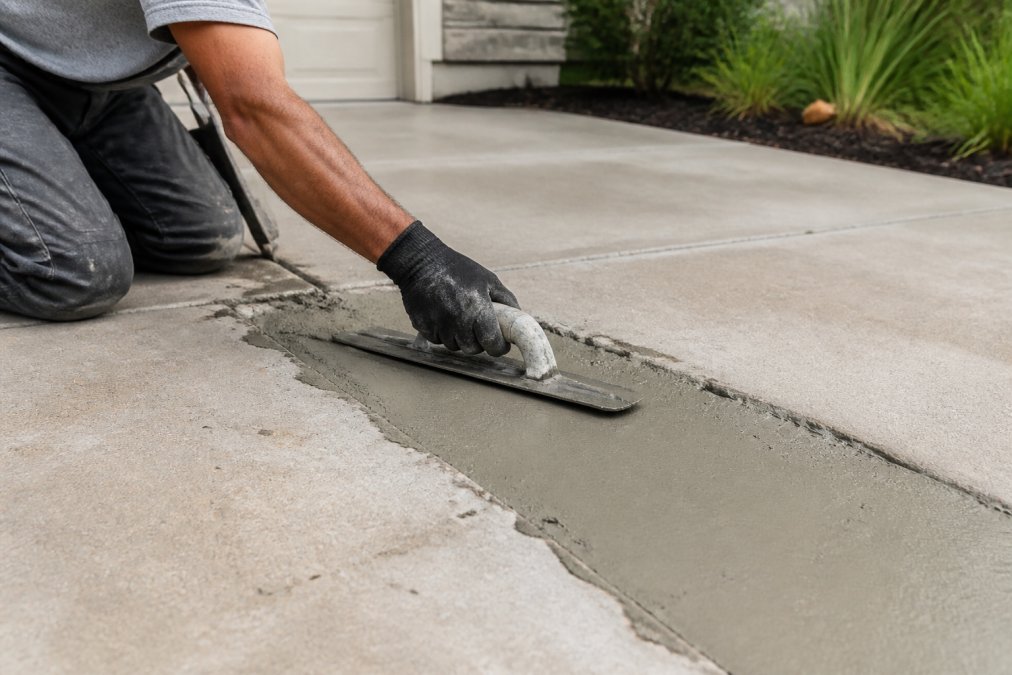
Concrete driveway resurfacing cost is often the middle-ground figure homeowners research first. Resurfacing applies a thin overlay, typically a quarter to half an inch thick, bonded to the existing slab, an excellent choice when the concrete beneath is structurally sound but the surface shows scaling, light spalling, or staining. It will not fix deep-seated cracks or settling; if the base has failed, the new surface will crack just as the old one did.
When Repair Is the Smart Choice
Repair is the smart choice when damage is localized and the structural base remains intact. Driveways with a few isolated cracks, small spalled areas, or minor scaling respond well to professional patching and sealing. Concrete lifting corrects sunken slabs without full replacement. Repair is also more sustainable, avoiding thousands of pounds of landfill waste. For driveways under 15 years old with no settling or deep structural cracking, professional repair plus regular maintenance extends lifespan at a fraction of replacement cost.
When Replacement Is the Only Option
Replacement becomes the only realistic option when structural integrity is compromised: widespread cracking, significant settling or heaving creating drainage issues toward the foundation, or concrete crumbling to the aggregate across large areas. When tree roots have lifted the slab or the sub-base has washed out entirely, no repair product can restore support. Repeated repairs over a few years will exceed the cost of a single replacement, and a new pour lets you address underlying causes like soil compaction, reinforcement mesh, and expansion joints.
Get a Professional Assessment
The most reliable way to resolve the repair vs. replacement question is a professional assessment from a contractor who inspects the sub-base, measures crack widths, and evaluates slab movement. Phone estimates or photos cannot reveal what is happening beneath the surface. A thorough evaluation checks for hollow spots indicating delamination, measures elevation differences across cracks, and assesses whether damage is progressing.
What a Professional Should Check, and What They Should Tell You
A competent contractor walks the entire slab, documents crack widths with a crack gauge, checks vertical displacement with a straightedge, and probes for hollow spots. They should also inspect drainage, poor grading directing water toward the slab is a leading cause of base failure, and a contractor who does not mention it is not giving you the full picture.
A professional assessment should include a clear explanation of the likely failure mechanism. If the contractor cannot tell you why the concrete failed, soil movement, poor compaction, inadequate thickness, or missing expansion joints, they are not qualified to recommend a repair, because the same failure will recur. Ask: Is the base sound? Is the cracking active or stable? What is the psi rating? A contractor who cannot answer these is not the right fit.
Permits, HOA Rules, and Utility Locates: The Bureaucratic Side of Replacement
Full driveway replacement is also a regulatory project. Before any tear-out begins, clear three hurdles that most online guides never mention.
Building Permits: Most municipalities require a permit for concrete driveway replacement. Some require a structural inspection of the sub-base before the pour; others only a final inspection. The fee is typically modest, $50 to $150, but skipping it can create serious problems: if you sell your home and the unpermitted work is discovered, you may face fines, a required inspection, or an order to tear out and redo the driveway. A contractor who says a permit is unnecessary is a red flag.
Homeowners Association (HOA) Approvals: If governed by an HOA, review your covenants, conditions, and restrictions (CC&Rs) before scheduling work. Many HOAs require architectural review approval for driveway replacement, including specifications for concrete color, finish, and thickness. Submitting without approval can result in a stop-work order or a requirement to tear out and repour at your expense. The process typically takes two to four weeks, so factor that into your timeline.
Utility Locates: Before any excavation, underground utilities must be located through the national 811 call-before-you-dig system (call811.com). Contractors are legally required to place a locate request at least two to three business days before digging, depending on state law. The service is free and prevents accidental strikes on gas lines, water mains, electrical conduits, and fiber-optic cables. A contractor who skips this step is violating safety regulations and putting your property at risk.
Asking the Right Questions Before You Sign
When you receive a proposal, it should be specific. A vague estimate that says "repair concrete driveway" without detailing the scope of work is not a professional document. A proper proposal should include:
- The exact scope: which cracks will be repaired, what method will be used (epoxy injection, patching, section replacement), and what materials will be applied.
- The sub-base work: will the contractor remove and recompact the base, or just pour over the existing soil?
- Reinforcement details: what mesh or rebar specification will be used, and at what spacing?
- Concrete specifications: the psi rating (typically 4,000 psi for driveways), the slump, and whether air-entrained concrete will be used for freeze-thaw resistance.
- Curing and protection: how long the concrete will be kept moist and protected from traffic.
- Warranty terms: what is covered, for how long, and what voids the warranty.
A contractor who provides this level of detail understands the technical requirements of a durable driveway. One who provides a one-page quote with a total price and little else is treating your project as a commodity, and the results will often reflect that.
Frequently Asked Questions
Is it cheaper to repair or replace a concrete driveway?
In most cases, repairing a concrete driveway is cheaper than a full replacement. Patching isolated cracks or performing a resurfacing costs a fraction of a new pour. However, repair is only cost-effective when the damage is cosmetic or localized. If the damage is structural, such as deep-seated cracks from base failure or widespread heaving, repairs will be temporary and you will end up paying for them twice. A professional assessment can determine if repair will be durable or if replacement is the more economical long-term choice.
How often does a concrete driveway need to be replaced?
A well-installed concrete driveway has an average lifespan of 25 to 30 years. This depends on several factors, including the quality of the sub-base preparation, the concrete's psi strength, and the local climate. In areas with expansive clay soil and significant freeze-thaw cycles, like Tulsa, the lifespan can be shorter if the driveway was not built with proper reinforcement and expansion joints. Regular maintenance, such as joint sealing, can help you reach the upper end of that range.
What are the signs that a concrete driveway is beyond repair?
A concrete driveway is beyond repair when it shows signs of structural failure. This includes deep, wide cracks that run completely through the slab, significant heaving or settling that creates trip hazards, and large areas of spalling where the surface is crumbling away. If the sub-base has failed due to soil erosion, patching the surface will not fix the underlying problem. In these cases, a full replacement is the only way to restore a safe, durable, and long-lasting driveway.
Does concrete repair last as long as a new pour?
No, a concrete repair will not last as long as a new pour. A full replacement, when done correctly with proper sub-base compaction and reinforcement, offers a fresh lifespan of 25 to 30 years. A repair, such as patching or resurfacing, is designed to extend the life of the existing slab but typically only adds 5 to 10 years, depending on the method and the extent of the damage. Repair is a cost-effective way to delay replacement, but it is not a permanent solution for a driveway that is nearing the end of its lifespan.