 comparison
Loco Concrete Alternatives for Tulsa Homeowners
Table of Contents
- Why Tulsa Homeowners Look Beyond One Concrete Company
- Quick Comparison: Concrete Alternatives for Tulsa Projects
- GatorCrete: Local Focus With GATOR TOUGH Results
- Sam the Concrete Man: National Franchise With Residential Focus
- Groundworks: Specialized Foundation and Structural Repair
- H Paving and Jimenez Construction: Versatile Paving and General Contracting
- Residential Concrete Driveway Installation Cost: What Drives the Price
- How to Evaluate Concrete Contractors Before You Hire
- Frequently Asked Questions
Last Updated: September 14, 2026
Why Tulsa Homeowners Look Beyond One Concrete Company
When you search for concrete alternatives in Tulsa, you're not really looking for a different material. You're looking for a different contractor experience. Most homeowners who start comparing concrete alternatives have already been burned: a vague quote, a crew that vanished mid-project, or a driveway that cracked again within two seasons.
This guide from GatorCrete breaks down the concrete alternatives worth considering for residential and commercial projects in the Greater Tulsa area, what each one is actually good at, and how to judge a bid before you sign anything.
Oklahoma Department of Transportation materials specifications
Quick Comparison: Concrete Alternatives for Tulsa Projects
The table below summarizes the concrete alternatives covered in this guide, what each does best, and who each is built for.
| Provider | Specialty | Best For | Pricing Model |
|---|---|---|---|
| GatorCrete | Residential and commercial concrete, repairs, sealing | Homeowners and businesses wanting one accountable local team | Quote-based |
| Sam the Concrete Man | National franchise residential work | Homeowners who want a recognized brand name | Quote-based |
| Groundworks | Foundation repair and concrete lifting | Settling slabs and structural issues | Quote-based |
| H Paving | Paving and resurfacing, concrete and asphalt | Driveways and parking areas needing both materials | Quote-based |
| Jimenez Construction | General construction plus concrete flatwork | Multi-trade projects with site prep | Quote-based |
GatorCrete: Local Focus With GATOR TOUGH Results
GatorCrete is a Greater Tulsa concrete contractor handling both residential and commercial work, from new driveway and patio installations to repairs and protective sealing. The difference is local accountability: one team, one point of contact, and a stated commitment to transparency and communication from quote to final walkthrough.
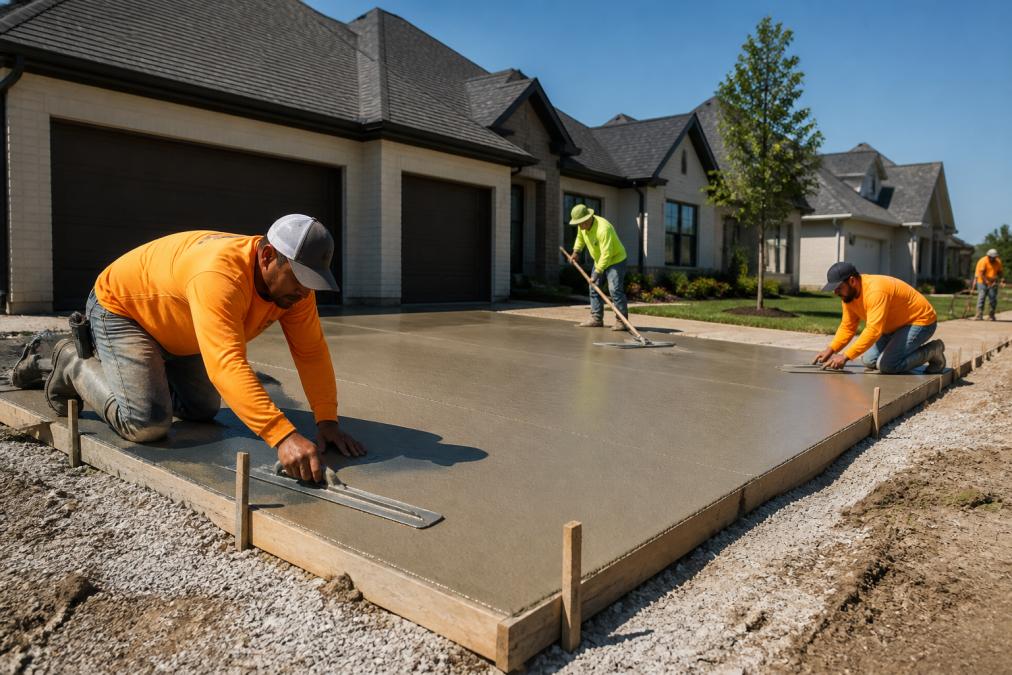
Where national franchises route you through call centers, GatorCrete operates locally. That matters when Oklahoma's clay soil shifts and you need someone who understands how subgrade prep and curing affect long-term performance.
Pros and Cons
Pros:
- Handles residential and commercial projects under one roof
- Focus on durable, GATOR TOUGH results and craftsmanship
- Transparent communication throughout the project
Cons:
- Local service area, so it won't suit property owners outside the Greater Tulsa area
Sam the Concrete Man: National Franchise With Residential Focus
Pros and Cons
Pros:
- Strong reputation for quality workmanship
- Extensive experience with residential concrete projects
Cons:
- Generally higher price point than smaller local contractors
- Often enforces project minimums
Groundworks: Specialized Foundation and Structural Repair
Pros and Cons
Pros:
- Highly specialized in structural concrete issues
- Large network with significant technical resources
Cons:
- Focus is more on repair and stabilization than decorative or new construction
- Pricing can be premium due to specialized equipment
H Paving and Jimenez Construction: Versatile Paving and General Contracting
H Paving
H Paving handles driveway installation and resurfacing in both concrete and asphalt, plus site preparation and grading. That dual-material capability is genuinely useful if you're weighing asphalt against poured concrete for a parking area. The limitation: the service mix is weighted toward paving, so small decorative concrete projects may not get priority scheduling.
Jimenez Construction
Jimenez Construction is a general construction and concrete contractor offering custom flatwork, foundations, and site management, with demolition and debris removal included. If your project involves more than concrete, this multi-trade model saves coordinating separate crews. The trade-off is specialization: niche decorative finishes aren't their strength, and availability can shift when large commercial contracts are running.
Material Durability Comparison: What You're Actually Choosing Between
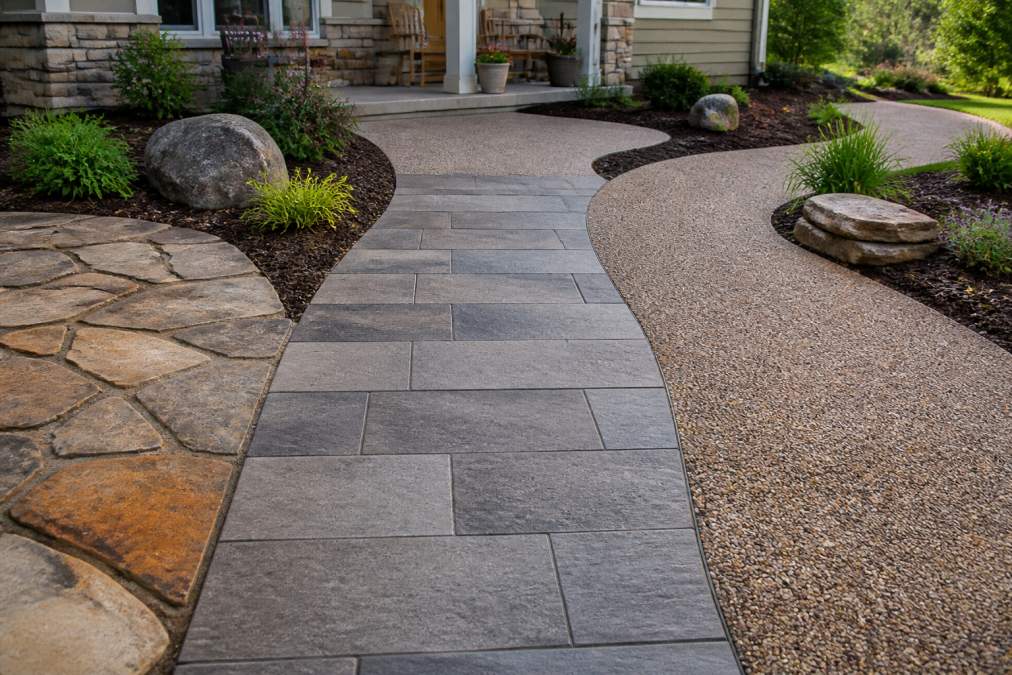
When homeowners search for concrete alternatives, they usually mean one of four things: poured concrete, stamped concrete, concrete pavers, or asphalt. Each behaves differently under the region's clay soil and freeze-thaw swings, and each has a different maintenance profile.
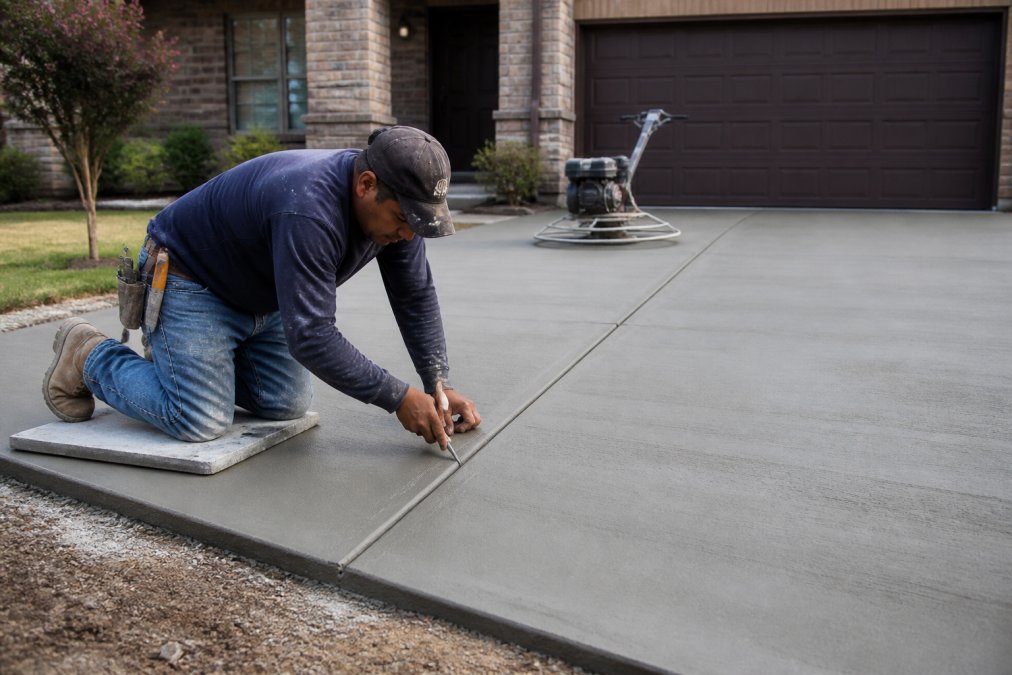
- Poured concrete slab. The baseline. A properly prepped 4-inch slab with rebar or mesh and control joints is the standard for driveways and patios. It resists rutting and is the cheapest per square foot of the hardscape options. Its weakness is cracking: clay subgrade movement and freeze-thaw cycles will find any weak control joint. Sealing every few years slows moisture intrusion.
- Stamped concrete. A poured slab with a stamped pattern and color hardener applied while the surface is still workable. It mimics stone or brick at a fraction of the installed cost of real masonry, but the surface layer is thinner than a paver and can spall or fade in high-traffic areas. It also cannot be spot-repaired invisibly, a damaged section usually means replacing a whole panel.
- Concrete pavers. Individual units set on a compacted base with sand joints. They flex with minor subgrade movement instead of cracking, and a damaged paver can be pulled and replaced without touching the rest of the surface. The trade-off is higher upfront material and labor cost and more joint maintenance, since polymeric sand needs refreshing periodically.
- Asphalt. Lowest upfront cost and fastest install, which is why it dominates parking lots. It is also the most heat-sensitive and requires sealcoating every few years and eventual overlay or replacement. In full sun, asphalt surfaces run hotter than concrete, which matters for patios (the EPA).
Matching the Material to the Project
- Driveways: poured concrete for lowest lifetime cost; pavers if you want repairability and curb appeal; asphalt if upfront budget is the constraint.
- Patios and porches: stamped concrete or pavers, since surface temperature and finish matter more than load-bearing capacity.
- Parking areas and commercial aprons: asphalt or reinforced concrete depending on traffic weight and drainage.
- Walkways: pavers or broom-finished concrete, both of which handle freeze-thaw better than a smooth troweled finish.
A contractor who can quote more than one of these materials is worth talking to precisely because they can tell you where their preferred material is the wrong answer.
Residential Concrete Driveway Installation Cost: What Drives the Price
Residential concrete driveway installation cost depends on four variables: square footage, site preparation, reinforcement and mix design, and finishing choices. No honest contractor quotes a number before seeing your subgrade.
Typical Cost Ranges by Project Type
These are common installed ranges for residential work in this market. Treat them as planning figures, not quotes: your subgrade, access, and finish selections will move the number.
| Project | Typical installed range (per sq ft) | Notes |
|---|---|---|
| Standard poured concrete driveway | $6-$12 | 4-inch slab, mesh or rebar, broom finish |
| Reinforced / thicker driveway | $10-$18 | 5-6 inch slab, rebar grid, heavier loads |
| Stamped or colored concrete | $12-$25 | Pattern, color hardener, release agent, sealer |
| Exposed aggregate | $10-$20 | Aggregate broadcast and washed |
| Concrete pavers | $15-$30 | Includes compacted base and sand joints |
| Asphalt driveway | $4-$9 | Lower upfront, higher long-term maintenance |
| Concrete patio (standard) | $8-$15 | Smaller square footage, similar prep |
| Concrete sealing (existing) | $1-$3 | Per sq ft, typically every 2-4 years |
What Actually Moves a Bid Up or Down
- Site preparation and subgrade work. Clay soil, poor drainage, and root intrusion all require excavation and base material before any concrete is poured. This is the line item cheap bids cut, and it is the single biggest predictor of whether the slab survives its first freeze-thaw cycle.
- Reinforcement. Rebar or mesh placement, and whether the slab is reinforced where it meets the street. Mesh is cheaper; a rebar grid costs more and performs better under load.
- Mix design and thickness. Thicker pours and higher-strength mixes cost more and last longer. A 4-inch slab is fine for foot traffic and light vehicles; a 5- or 6-inch slab is the norm where trucks or RVs will park.
- Finishing and decorative options. Stamped concrete, exposed aggregate, and colored finishes add labor and material, often the largest single swing in the quote.
- Sealing. A protective sealer slows moisture intrusion, which matters in a climate with freeze-thaw cycles. Budget for resealing every few years.
- Access and disposal. Tight lots, fence removal, and hauling away old concrete add cost that is easy to overlook until it shows up as a change order.
DIY vs. Professional: When Each Makes Sense
A cost comparison is incomplete without an honest look at whether you should be doing the work at all.
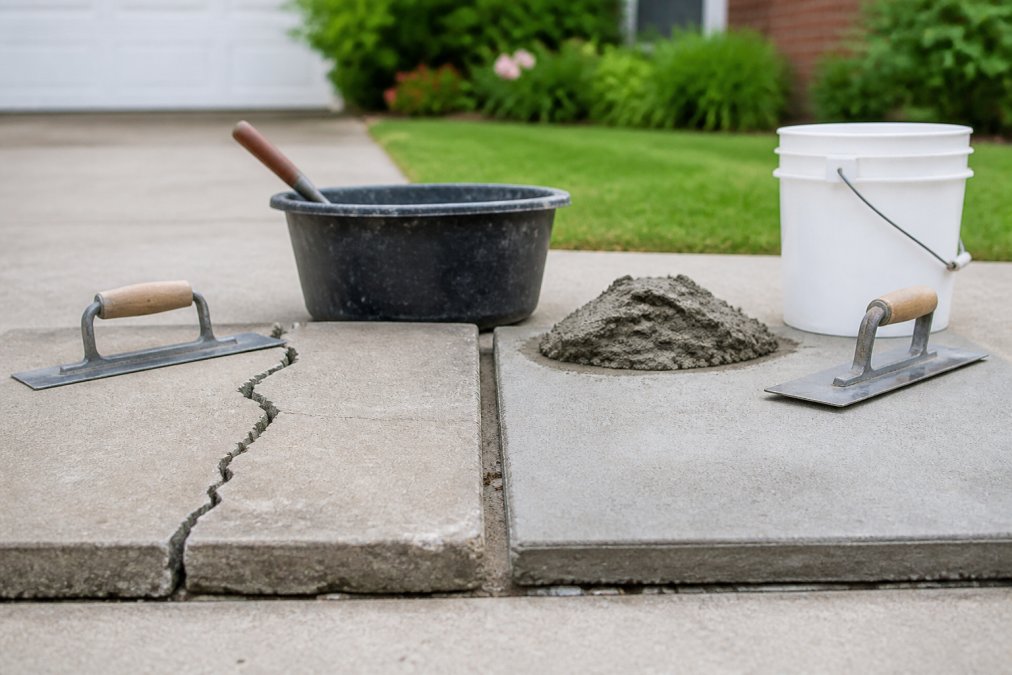
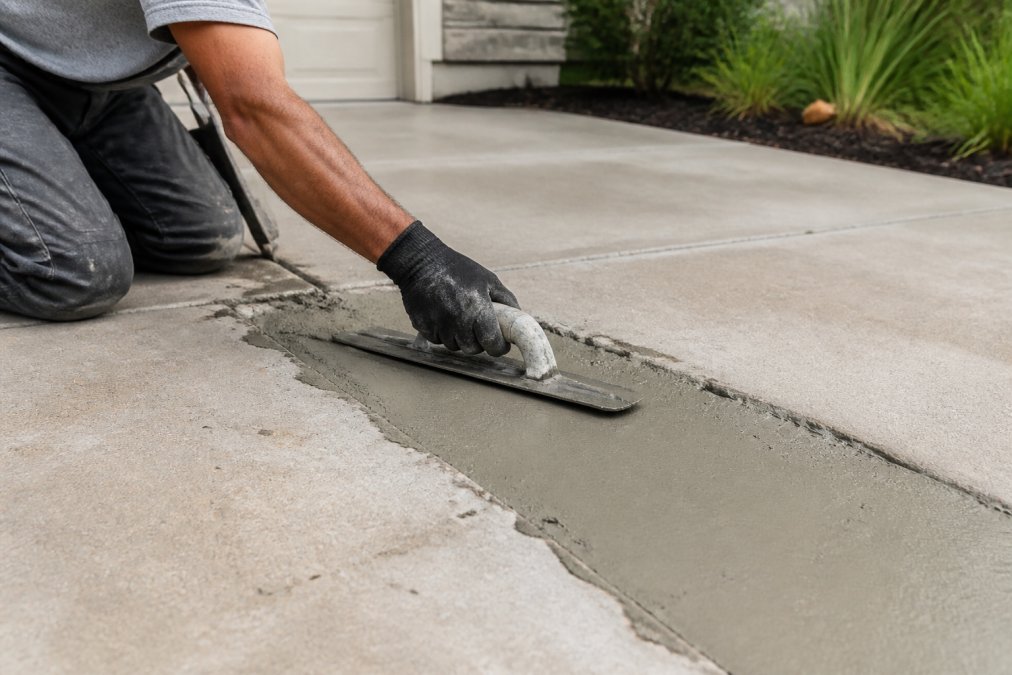
- DIY-friendly: small patios under roughly 100 square feet, walkway sections, crack filling, and resealing an existing slab. Bagged concrete and a rented mixer can handle these, and the downside of a mistake is cosmetic.
- Borderline: small slabs and short walkways where you can control the subgrade and cure time. The risk is that a rushed cure or thin pour fails within a season.
- Hire a pro: anything over roughly 100 square feet, any driveway, any structural or foundation work, and any decorative finish. Stamped and exposed-aggregate work has a narrow working window between pour and finish that is unforgiving for first-timers. Driveways and foundations also carry permitting, drainage, and load requirements that a licensed contractor is set up to handle.
The honest rule: if the project touches a vehicle, a structure, or a finish you care about, the labor savings from DIY rarely survive the first repair.
How to Evaluate Concrete Contractors Before You Hire
Knowing how to evaluate concrete contractors comes down to three checks: a written scope, verifiable local references, and a clear payment schedule. Run every bid through these before you commit.
- The quote lists square footage, thickness, and reinforcement in writing
- Site preparation and disposal are itemized, not bundled into a vague total
- You've seen at least two completed local projects in person
- The payment schedule ties deposits to milestones, not to a calendar
- Curing and sealing expectations are stated up front
- You have a written timeline and a named point of contact
Federal Trade Commission guidance on hiring contractors
A local crew that answers these questions directly is worth more than a low bid that dodges them. That's the standard GatorCrete holds itself to: transparent pricing, clear communication, and durable results built for Oklahoma soil.
Frequently Asked Questions
What should I look for when hiring a concrete contractor in Tulsa?
Look for licensed and insured contractors with local experience in Tulsa's clay soil conditions. Ask for references from similar projects, verify they pull proper permits, and confirm they carry general liability and workers' compensation insurance. A professional contractor will provide a written contract with a clear scope of work, timeline, and payment schedule. GatorCrete emphasizes transparency and communication throughout every project.
How do I compare quotes from different concrete companies?
Compare quotes line by line, not just the bottom line. Check what's included: site preparation, subgrade prep, reinforcement, concrete mix design, finishing, and cleanup. A lower quote may exclude critical steps like proper subgrade compaction or reinforced concrete. Ask each contractor to specify concrete thickness, PSI rating, and whether they use rebar or wire mesh. Request a written scope of work so you can compare apples to apples.
Is it better to repair or replace old concrete?
It depends on the extent of damage. Small cracks and surface issues can often be repaired with concrete resurfacing or sealing. However, if you see widespread cracking, sinking, or structural failure, replacement is usually more cost-effective long-term. Tulsa's expansive clay soil causes significant movement, so addressing the underlying cause matters as much as the surface fix. A professional assessment will tell you which option makes sense for your situation.
How much does residential concrete driveway installation cost?
Residential concrete driveway installation cost varies based on square footage, site preparation needs, concrete thickness, reinforcement, and decorative finishes. Factors like soil conditions, accessibility, and local building codes also affect pricing. For an accurate quote specific to your Tulsa-area property, contact GatorCrete directly. They provide transparent estimates based on your actual project requirements rather than generic pricing.
What certifications should a reputable concrete contractor hold?
A reputable concrete contractor should hold a valid Oklahoma contractor license, general liability insurance, and workers' compensation coverage. Look for membership in industry organizations like the American Concrete Institute (ACI) and certifications in concrete finishing or decorative concrete. Ask about their experience with local building codes and permit processes. GatorCrete is committed to transparency and communication.
Comparing concrete alternatives for your Tulsa property comes down to matching the contractor to the job, not chasing the lowest number. GatorCrete handles residential and commercial concrete across the Greater Tulsa area, from new driveway and patio installations to repairs and protective sealing, with the GATOR TOUGH craftsmanship and transparent communication that keep projects on track. Get a quote from GatorCrete and build something that holds up.